


Nurturing Young Minds: The Importance of Early Islamic Education
Children are the future of every family and community. Giving them Islamic Education from an early age helps them develop strong values, good character, and a meaningful connection with their faith. However, many parents find it difficult to make practices such as Salah and Quran recitation interesting and enjoyable for their kids.
For this reason, many parents look for an Islamic school or a qualified Islamic teacher for their children. While Islamic schools and teachers can provide valuable support, parents remain the most important influence in a child’s Islamic upbringing. Islamic education does not begin and end in a classroom. The home is where children first learn how to practice Islam, develop good manners, and understand their responsibilities as Muslims.
Sending a child to an Islamic school can be helpful, but it should be considered part of a much bigger journey. Parents should remain actively involved in their children’s Islamic education and make Islamic values part of their everyday lives.
Parents: The First Madrasa
Parents are a child’s first teachers and the home is their first madrasa. Children naturally observe and imitate what their parents do, so your words, actions, habits, and daily routine can have a lasting impact on how they understand Islam.
If you want to see positive changes in your child’s life, take an active interest in their education and upbringing. Learning about parenting according to Quran and putting Islamic principles into practice can help parents provide better tarbiyah for their children.
Islam should be a part of our everyday life, not something children only learn during a class. Create an Islamic environment at home and introduce your children to the basic teachings and values of Islam. The earlier children become familiar with Islam, the easier it can be for them to develop love and interest in their faith.
Simple things can make a difference—praying together, teaching them short Duas, talking about Allah, reading Islamic stories, and showing kindness and good manners in daily life.
Building a Strong Foundation: Core Islamic Concepts
A strong Islamic foundation starts with simple concepts that children can understand and practice. Parents and teachers can gradually introduce important areas of Islamic learning, including:
Aqidah (Belief): Help children understand the oneness of Allah and introduce them to the basic principles of faith in an age-appropriate way.
Pillars of Islam: Teach children about the five pillars of Islam through simple explanations, examples, and interactive activities.
Quranic Recitation: Introduce children to short Surahs and help them develop correct Quranic Recitation with proper Tajweed.
Hadith and Seerah: Share inspiring stories from the life of the Prophet Muhammad (ﷺ) to develop love, respect, and admiration for him.
Duas: Encourage children to learn and practice daily Duas so they can develop a stronger personal connection with Allah.
Engaging Tools: Books and Stories
Introducing Islamic Education at an early age can help children develop a natural interest in learning about their religion. One simple way to do this is through age-appropriate Islamic books and stories.
Books can become wonderful companions for children. Islamic stories are especially effective because children naturally enjoy stories and can learn important lessons through them. Colorful books featuring the stories of Prophets, Companions, and valuable moral lessons can make Islamic learning more enjoyable and meaningful.
Instead of making every lesson feel like a formal class, parents can use stories to introduce Islamic values in a simple and memorable way. Reading together also gives parents an opportunity to discuss the lessons and connect them with situations children experience in everyday life.
Embracing Modern Solutions: Online Learning with Al Afaq Quran Academy
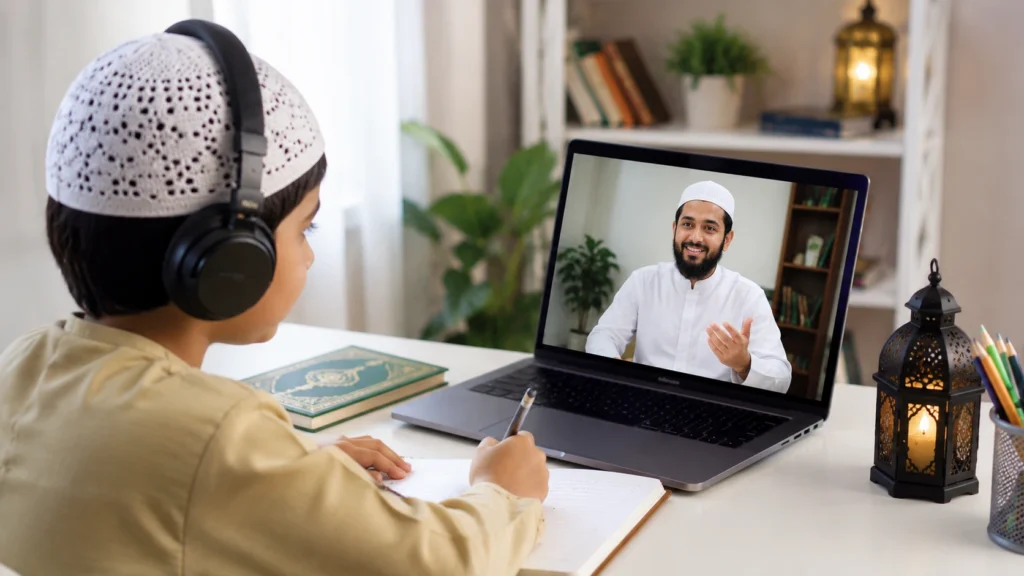
Technology has changed the way children learn, and online learning has made Islamic education more accessible to families around the world. Online platforms such as Al Afaq Quran Academy provide flexible learning options designed to help kids learn Quran and essential Islamic subjects from home.
The available courses include:
Basic Noorani Qaida Course
✅ Quran Reading and Memorization
✅ Quran Translation
✅ Islamic Studies for Kids
These programs are designed to make learning engaging and convenient while allowing lessons to be adapted to each child’s level and learning pace. Online classes can also provide children with individual attention and a comfortable learning environment at home.
Final Thoughts
Teaching Islam to your children is a great responsibility, but it is also one of the most valuable gifts you can give them. Helping your kids learn about Allah, the Prophet Muhammad (ﷺ), the Quran, and Islamic values can give them a strong foundation of faith and good character.
You do not need to teach everything at once. Begin with small and consistent steps. Teach them short Surahs and daily Duas, share meaningful Islamic stories, show them how to pray, and encourage kindness and good manners through your own example.
Parents can also make use of helpful resources such as Islamic books, educational devices, and online classes like EQuran School to make learning more accessible and engaging.
Remember, the lessons children learn today can influence the people they become tomorrow. With proper guidance, love, patience, and consistent tarbiyah, InshaAllah, they can grow into practicing Muslims with strong faith and good character who make their families proud in this world and in the hereafter.
May Allah (عَزَّوَجَلَّ) enable us to teach our children the beautiful teachings of Islam and guide them to become good Muslims. Ameen.
I want to help my kids learn the basics of Islam.